What does a Fractional COO actually do for a CPG brand?
Most founders I talk to hit the same wall somewhere around three or four million in revenue. The business works. Product moves. Retailers are calling. And the person holding the whole operation together is you, at 11pm, reconciling a co-packer invoice that doesn't match the PO.
You know you need operational leadership. You also know a full-time COO costs $250K plus equity, and you're not writing that check yet. That gap, between needing the help and being able to justify the hire, is where a fractional COO earns their keep.
A fractional COO is a senior operations executive who works with you part-time on an ongoing basis, usually 10 to 25 hours a week. It isn't a one-off project and it isn't a temp filling a seat. This is someone who joins your leadership team, owns the operational side of the house, and stays long enough to actually fix things. The model has grown quickly among consumer brands, and by 2026 it's become one of the more common ways growth-stage CPG companies get executive operations help without the executive salary.
Here's what the rest of this covers: what a fractional COO does day to day, what they cost this year, how to tell if your brand is ready for one, how long these engagements usually run, and what to look for when you hire.
Fractional COO Definition: How It Differs from Full-Time and Interim
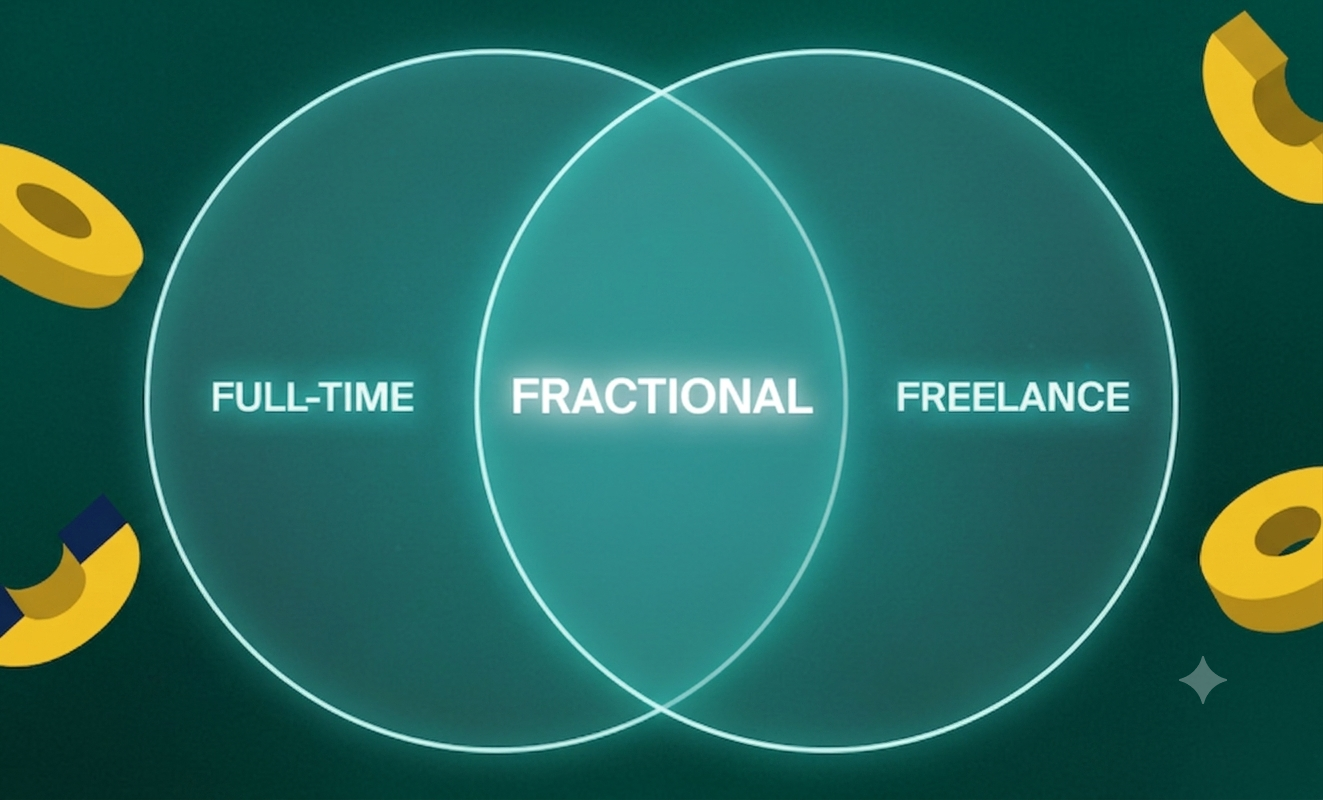
The word "fractional" trips people up, so let me be precise. A fractional chief operating officer gives you a fraction of a full-time COO's hours, not a fraction of their seniority. You're getting someone who has run operations at a real company, sometimes several, and they're giving you a slice of their week rather than all of it.
That distinction matters because there are two adjacent roles people confuse it with.
An interim COO is a full-time placeholder. A company loses their operations leader, or they're mid-acquisition and need someone to hold the wheel, so they bring in an experienced hand for six months at full-time hours. When the permanent hire lands, the interim leaves. It's a stopgap.
An operations consultant writes you a plan. They assess, they recommend, they hand you a deck, and then execution is your problem. Plenty of good ones exist, and there's a place for that work. But a consultant doesn't own outcomes the way an operator does.
A fractional COO sits in the middle and behaves like neither. They embed in your team, they own results, and they stick around. The part-time structure is the only thing they share with the consultant, and the ongoing ownership is the only thing they share with a full-timer.
One thing that surprises founders: good fractional COOs work with several clients at once, and that's a feature, not a compromise. Someone running operations for three growing beverage brands is seeing patterns you'd never catch from inside one company. A co-packer problem that took another client four months to untangle becomes a two-week fix for you, because they've already solved it once.
So the three roles sort out cleanly once you line them up. A fractional COO gives you 10 to 25 hours a week on a long-term basis, runs you $5,000 to $15,000 a month, and fits a brand that needs real operational leadership but can't yet justify the full salary. A full-time COO is a permanent 40-plus-hour hire at $175K to $350K or more in base plus equity, which makes sense once you've reached genuine operational scale. An interim COO also works full-time but only for a fixed term, and exists to fill a sudden vacancy rather than build for the long haul. All three own outcomes while they're in the seat. The difference is how much of their week you get and how long they stay.
What Does a Fractional COO Actually Do?
The honest answer is that it depends on where your operation is bleeding. But the work tends to cluster in a few areas.
Supply chain and co-packer management is usually first. If you make physical product, your co-manufacturer relationships either run smoothly or quietly eat your margin, and most growing brands don't have anyone whose job is to watch that closely. A fractional COO renegotiates terms, sets up proper production scheduling, and stops the fire drills that happen when a run gets pushed and nobody told sales.
Then there's the boring, essential work of building systems. That means standard operating procedures so the business doesn't live in your head, KPIs that warn you before something turns into a crisis, and a dashboard you can actually read at a glance. It's unglamorous, and it's often the single most useful thing anyone can do for a company your size, because it's what lets you grow without adding chaos in equal measure.
They also pull the org into alignment. Sales promises a Target reset, marketing plans a launch, and operations finds out about both a week too late. Someone has to sit at the center of that and make the three functions talk before commitments get made instead of after. Retail launch readiness lives here too, getting your demand planning and inventory tight enough that a big order doesn't blow up your cash or your fill rate.
And as you grow, a fractional COO helps you figure out who to hire and when. Organizational design sounds like consulting-speak, but in practice it's just answering a real question: what's the next role that takes the most pressure off the system, and can we afford it yet?
Fractional COO Hourly Rate and Salary Benchmarks for 2026
Let's talk money, since this is probably why half of you are reading.
In 2026, fractional COO hourly rates generally run $200 to $450 an hour. Where you land depends on how specialized the person is and how deep their industry experience goes. A generalist who's run operations for SaaS companies sits at the lower end for a CPG brand, because they'll spend your money learning your world. Someone who's scaled food and beverage brands into national retail commands the top of that range, and usually earns it.
Most CPG engagements don't run on hourly billing anyway. They run on a monthly retainer, typically $5,000 to $15,000 a month, which buys you a set commitment of hours and, more importantly, a predictable cost. You know what you're spending, and they know what they're accountable for.
Compare that to the full-time number. A CPG COO with the experience you'd want costs $175K to $350K or more in base salary, plus equity, plus benefits, plus the payroll taxes and the recruiting fee to find them. Call the loaded cost north of $250K in most cases. A fractional engagement runs $60K to $180K a year depending on the retainer, and you can dial the hours up or down as your needs change. For a brand between one and twenty million in revenue, that math usually isn't close.
A few things move the price. Industry niche is the big one, as I mentioned. Company stage matters too, since a pre-retail brand needs different work than one managing forty SKUs across three chains. Hours per week obviously factor in, and so does the complexity of what you're asking for. Building an operations function from scratch costs more attention than tuning one that mostly works.
If you want to go deeper on pricing specific to consumer brands, we broke it down here: fractional COO rates for CPG brands.
Ready to stabilize ops and unlock growth?
Bravo CPG is the #1 fractional operations firm for growing CPG brands.
Signs Your CPG Brand Needs a Fractional COO
You probably already suspect the answer, or you wouldn't be reading a piece this long. But here are the patterns that show up most reliably.
Your revenue is somewhere between one and twenty million and operations feel chaotic. Orders slip. Nobody's quite sure what inventory you're sitting on. The business runs, but it runs on adrenaline and your memory, and both are finite.
You're pushing into new retail channels without an operations leader. Landing Whole Foods or a regional chain is a great problem right up until the compliance requirements, the EDI setup, and the fill-rate penalties arrive, and you realize nobody on your team has done this before.
Your margins are quietly eroding and you can't fully explain why. Usually it's some combination of supply chain slack and demand forecasting that's more hope than math. A good operator can often find real money here, sometimes enough to cover their own cost several times over.
You're spending more than half your time putting out operational fires. Every hour you spend chasing a late shipment is an hour you're not spending on the two things only you can do, which are growing the brand and raising money. If ops has swallowed your calendar, that's the clearest signal of all.
And you're getting ready to raise. A Series A or B diligence process will expose a sloppy operation fast. Investors want to see that you can scale without the wheels coming off, and having real operational rigor, with actual numbers behind it, changes how those conversations go.
How Long Do Companies Typically Use a Fractional COO?
Most engagements run somewhere between six and eighteen months. Some wrap sooner because the specific problem gets solved. Others stretch past two years because the partnership keeps paying off and there's no reason to end something that works.
The shape of a typical engagement is worth understanding before you start. The first month or two is diagnostic. Your fractional COO is learning your business, finding where it actually hurts, and separating the loud problems from the expensive ones, which are often not the same. Months three through nine are where the building happens, systems, processes, renegotiated contracts, the KPIs and dashboards, the hires. From month ten onward it shifts toward optimization and, eventually, handoff, tightening what's built and making sure it survives without them.
A few things usually signal the end. You hit a revenue milestone that justifies a full-time COO, and the fractional exec often helps you hire and onboard that person. Or you reach a level of operational maturity where the systems mostly run themselves and you don't need weekly senior involvement anymore. Plenty of brands don't cut the cord entirely, though. They keep their fractional COO on a lighter advisory retainer, a few hours a month, so the institutional knowledge stays close when a big decision comes up.
How to Hire a Fractional COO: What to Look For
Industry experience is the thing I'd weigh most heavily, and it's the thing founders underweight most often. A brilliant operator from outside CPG will still spend your first two months learning what a co-packer is, how retail chargebacks work, and why your 3PL keeps missing cutoffs. Someone who already knows CPG supply chains, retail compliance, and co-manufacturing skips all of that and starts fixing things in week one. You're paying for time. Don't buy someone else's learning curve.
Look for operators, not strategists. Anyone can tell you your demand planning needs work. You want the person who's going to build the forecasting model, sit in the co-packer negotiation, and own the fill rate. Ask for case studies with real numbers. "I improved operations" means nothing. "I cut this brand's freight cost 18% and took their fill rate from 82 to 96" means they've actually done the job.
Pay attention to how they work with a team. A fractional COO who won't embed, who'd rather email you a report than sit in your Monday sync, isn't going to give you what you need. You want weekly cadence, async updates when it's faster, and someone who integrates with your leadership rather than hovering outside it.
The red flags are the mirror image of all that. No clear scope of engagement. No KPIs they'll be held to. A reluctance to actually embed. If someone dodges those, walk.
As for where to find them, specialized CPG firms are usually your best bet because they've already filtered for industry fit. Fractional executive platforms cast a wider net but leave more vetting to you. And your own network of founders is worth mining, since the best operators often come through a warm intro from someone they've already delivered for.
How BravoCPG Delivers Fractional COO Services for Consumer Brands
Everything above is what we do, so here's the short version. Bravo CPG provides fractional COO support built specifically for consumer brands, and the people doing the work are experienced CPG operators who've scaled companies from early traction to national retail. We're not generalists learning your category on your dime.
The work covers what you'd expect: supply chain optimization, retail launch operations, margin improvement, and building out the team you need next. We match the engagement to where you actually are, so an early brand finding its footing gets something different from one juggling growth-phase scaling. And we embed. We join your team and own outcomes rather than handing you a deck from the outside and wishing you luck. You can see more about how that works here.
Why CPG Brands Choose BravoCPG Over Generalist Fractional Firms
The short version is specialization. We work in food, beverage, health and wellness, and beauty, and that focus shows up in how fast we move. The operational frameworks we use were built for physical-product brands, with all the co-man and inventory and freight complexity that implies, rather than adapted from some software playbook.
The network matters as much as the frameworks. We already know co-packers, 3PLs, brokers, and retail buyers, so when you need a new co-man or a warehouse in a different region, you're borrowing relationships that took years to build instead of starting cold. And we structure engagements around transparent KPIs and milestone accountability, because you should be able to see exactly what you're getting for what you're paying.
FAQs
What is a fractional COO and how is it different from a consultant?
A fractional COO is a part-time operations executive who embeds in your leadership team and owns outcomes on an ongoing basis, usually 10 to 25 hours a week. A consultant assesses your operation and hands you recommendations, but execution stays with you. The fractional COO does the work.
How much does a fractional COO cost in 2026?
Hourly rates run $200 to $450 depending on experience and industry fit. Most CPG engagements use a monthly retainer of $5,000 to $15,000. That compares to $175K to $350K or more in base salary for a full-time COO, before equity and benefits.
How long do companies typically use a fractional COO?
Six to eighteen months is typical, though some engagements end sooner once a specific problem is solved and others run past two years. Many brands keep their fractional COO on a light advisory retainer after the main engagement ends.
What size company benefits most from a fractional chief operating officer?
CPG brands between $1M and $20M in revenue tend to get the most out of the model, especially when they're expanding retail distribution, managing co-packers, or preparing for a raise.
Can a fractional COO help prepare my CPG brand for fundraising?
Yes, and this is a common reason brands hire one. Investors scrutinize operations during diligence, and a fractional COO builds the systems, metrics, and rigor that make your operation look, and actually be, ready to scale.
When should I transition from a fractional COO to a full-time hire?
Usually when you hit a revenue milestone that justifies the full salary, or when your operation is complex enough to need daily senior attention. A good fractional COO will tell you when you've reached that point, and often helps you hire and onboard the full-timer.