
The CPG Brand Launch Checklist You Actually Need
You've done the hard part. You've validated the product, nailed the brand, built a pitch deck that actually gets buyers to take a meeting. Now comes the part that most founders underestimate: the operational infrastructure to actually get products made and delivered on time, in full, at a margin that makes the whole thing worth it.
According to Nielsen, more than 85% of new CPG products fail in the marketplace. Most founders assume those failures are product-market fit problems. Sometimes they are. But a significant chunk trace back to operations: missed ship windows, stockouts during launch momentum, chargebacks that eat into margins, co-packer timelines that slipped, improper demand planning that tied up cash in inventory, improper view of landed costs. The product was fine. The operational infrastructure wasn't there.
This isn't meant to scare you. We’ve worked with 225 brands at Bravo CPG, and this guide is meant to help you avoid the traps we've seen derail otherwise great brands. If you get the ops side right, the rest gets a lot more fun.
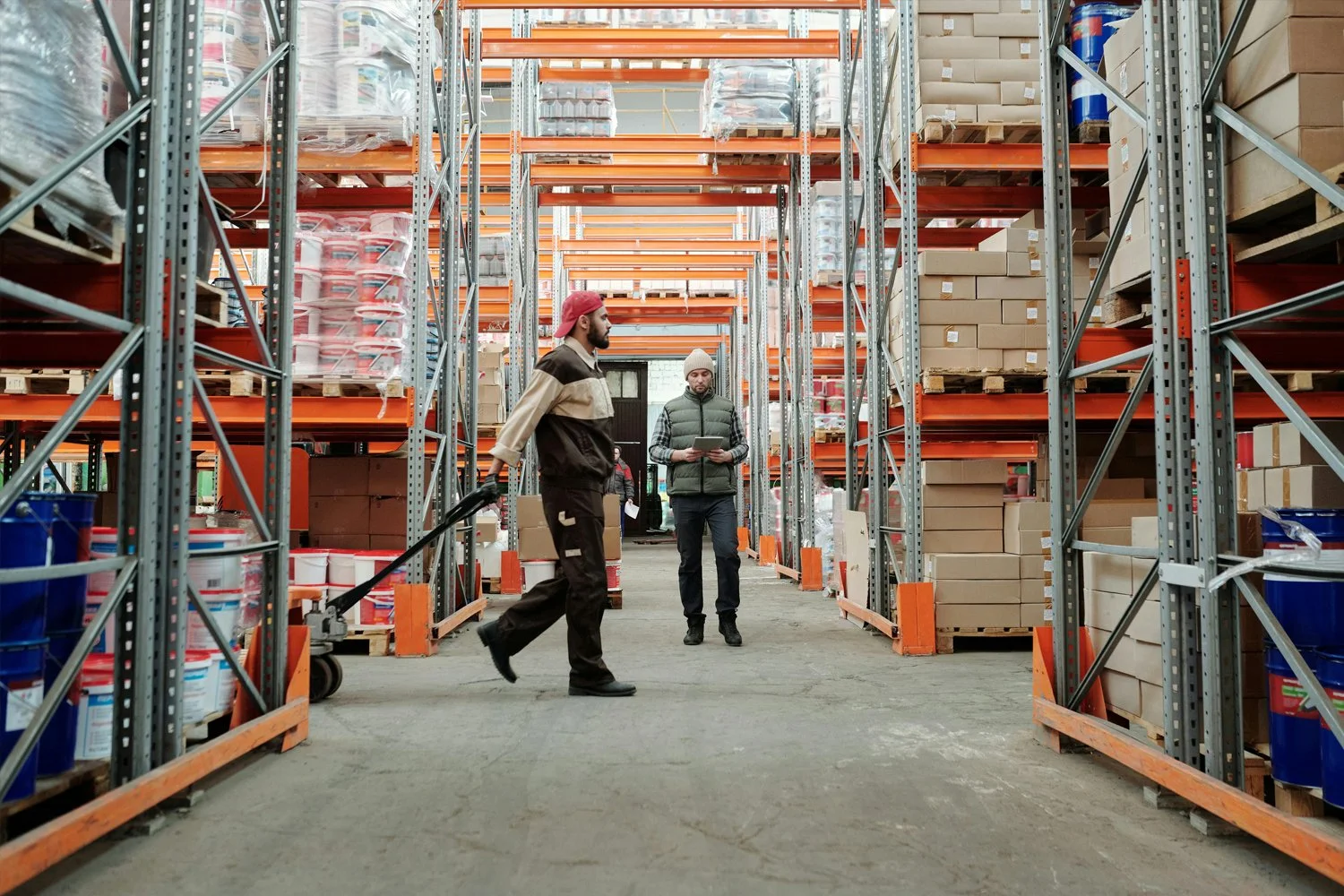
Why Most CPG Launches Fail on the Operations Side
Most launch plans are built backward. The launch date gets set first, then someone figures out what operations needs to do to support it. Sourcing conversations start too late. Co-packer capacity isn't locked. Compliance reviews get jammed into the final weeks before production.
The brands that execute well treat operations as a prerequisite to sales, not a follow-on task. They have a good sense of their landed cost before they sign a retailer agreement. They've run a test production batch before committing to a PO. They have a 3PL set up and tested before the first pallet ships. That's the mindset this checklist is built around.
Here are the core items we recommend adding to every CPG launch checklist. Below, we go into more detail on each.
Know Your Numbers Before You Commit to a Retail Partnership
Build Your Demand Plan Before You Need One
Choose the Right Co-Manufacturer and be Realistic About Production Timelines
Procurement and Supplier Readiness
DIY vs. Fractional Ops Team vs. Full-Time Hire
Set Up Your 3PL and Fulfillment Before Launch Day
Retailer and Wholesale Order Readiness
Inventory Allocation and Tracking
Compliance and Labeling
Post-Launch Operations Review
Make Sure Sales, Operations & Finance are Talking to Each Other
Know Your Numbers Before You Commit
Landed cost is the total cost to get your product to a customer or retailer, fully loaded. That includes your cost of goods (ingredients, packaging, co-man fees), inbound freight from your manufacturer, warehousing, outbound freight, and any applicable duties or tariffs. It does not include your marketing spend, broker fees, or trade spend, but those come out of the margin that's left after landed cost.
Here's why this matters before you launch: if your landed cost is too high, your margins won't survive retail. A typical natural grocery buyer expects 40-50% gross margin from a supplier. If you're selling a product at $5 wholesale and your landed cost is $3.20, you're at 36% margin before freefills, deductions, slotting fees, and freight allowances hit. It will be very challenging to make it work no matter how well the product sells.
Run the numbers. Fully. Before you commit to a retailer program.
Build Your Demand Plan Before You Need One
Sales and operations planning (S&OP) is the process of aligning what you expect to sell with what you need to produce, procure, and fulfill, and making sure that you have the cash flow to support production. For growth-stage brands, this doesn't need to be complicated. A rolling 12-week forecast with three scenarios (conservative, base, and upside) is enough to give your co-manufacturer and suppliers the visibility they need to plan with you. Communicating with your co-mans early and often will strengthen your partnership, and ensure you are able to produce in a time efficient manner.
What founders consistently get wrong here is treating the launch forecast as a one-time exercise. It isn't. Your real velocity data from weeks two, three, and four of launch will be dramatically more useful than anything you projected before going live. Build your forecast infrastructure so you can update it fast when reality hits.
Caveat: Before you have historical data, your demand plan is going to be a guess. That is ok! Everything is an assumption, at first, and your model will improve as you go along.
Choose the Right Co-Manufacturer and be Realistic About Production Timelines
Choosing the right co-man is one of the most consequential decisions a brand makes at launch. The criteria that matter most are: do they have validated experience with your product format, what are their minimum order quantities relative to your launch volume, how do they handle quality holds, and what does their first-run timeline actually look like (not the optimistic one they quote you in a sales call, but the realistic one). You also want someone who is willing to work with you, and make changes along the way. A partner who can help you incorporate the feedback you’ll get post-launch.
Most first-run timelines take longer than expected. Budget for it. If your co-man says six weeks to the first production, plan for eight. Make sure your production schedule is built to give you lead time before your retailer's first ship window. A missed ship window on a new item doesn't just delay revenue. It can cost you the program and relationship entirely.
More on production planning and co-packer management here.
Ready to own your operations?
Bravo CPG is the #1 fractional operations firm for growing CPG brands.
Procurement and Supplier Readiness
Your procurement checklist before launch should cover at minimum: confirmed lead times from every ingredient and packaging supplier, MOQ alignment with your production schedule, certificates of analysis (COAs) in hand, backup supplier options identified (not just noted), and a purchase order timeline that accounts for supplier lead times working backward from your production date.
The most common first-launch procurement mistake is ordering materials based on your initial forecast without a buffer. Supplier lead times shift. A key ingredient runs short. A packaging component has a QC issue. If you're procuring to exactly what you need, you have zero room to absorb those problems. Build in 10-15% buffer on critical inputs. And if you need help figuring out that buffer, chat with Bravo CPG.
DIY vs. Fractional Ops Team vs. Full-Time Hire
This is a real decision with real tradeoffs, and the answer depends on where you are in your growth stage. Here's how to think about it honestly.
Doing it yourself makes sense early, especially if you're a founder with an operations background. But it doesn't scale. Once you're managing a co-manufacturer, a 3PL, multiple retail accounts, and a demand plan simultaneously, the complexity adds up fast.
A full-time Director of Operations hire brings dedicated focus and institutional knowledge, but the cost is significant and usually too great for growing brands. According to Fore Brands, a Director of Operations in food and beverage averages around $175k - $200k per year in base salary. Add benefits, equity, and ramp time, and you're looking at a meaningful overhead commitment before your hire is fully productive. Remember that at the early stages you need a “doer” as well as a “leader” and not all Director-level talent wants to roll up their sleeves and operate at all levels.
A fractional ops team (like Bravo CPG) lets you access senior-level execution without the full-time overhead. For brands between $1M and $20M in revenue managing their first or second major launch, this is often the best path. You get experience, bandwidth, and accountability without betting the headcount budget on a single hire.
Set Up Your 3PL and Fulfillment Before Launch Day
Your 3PL setup checklist should include: onboarding completed and receiving procedures confirmed, EDI or portal integration tested, labeling requirements communicated, and at least one inbound receipt processed before your launch inventory arrives. Don't learn your 3PL's receiving process for the first time when you have a $150,000 shipment in transit. And send a few test shipments through your website, if you’re launching DTC as well.
OTIF (on-time, in-full) is the metric that matters most for your retail relationships. Most major retailers require OTIF performance at 95% or above. Falling below that threshold triggers chargebacks, which are deductions taken directly from your invoice. For a $50,000 retail PO, a 5% OTIF miss can mean $2,500 in chargebacks you didn't plan for. At launch, when you're trying to demonstrate operational reliability to a new retail partner, that's the worst possible time to take the hit.
One last tip here: ensure that your 3PL has ambient storage if any component of your product is prone to melting. This means that the 3PL will keep your products stored below ~80 degrees and that can save your product in the summer season!
More on 3PL and FBA management here.
Retailer and Wholesale Order Readiness
Launching into retail is operationally different from DTC. Retailers expect EDI (electronic data interchange) compliance, specific labeling and UPC requirements, adherence to routing guides, and in many cases, a vendor portal setup before they'll even cut you a PO. Getting caught without EDI setup after you've secured a retail program is a common and avoidable problem.
Your pre-PO readiness checklist should confirm: UPCs assigned to every SKU and case configuration, GS1 compliance verified, EDI setup complete or vendor portal confirmed, routing guide reviewed and logistics team briefed, and a clear ship window committed to your buyer. Don't show up to a launch conversation with a retail buyer without knowing exactly what your logistics can and can't do.
One more pro-tip: set your MOQs at a level that makes sense for your business. The retailers will push back but we recommend that you also push back hard. Aim to set a minimum of one pallet per PO (which can include multiple SKUs). If you ship pallets that aren’t full, your freight cost/unit is going to be high.
If you need support detailing with retail order management, Bravo CPG is a great solution.
Inventory Allocation and Tracking
Inventory management at launch isn't just about having enough product. It's about knowing exactly where it is, which lots are committed to which channels, and what you have available to sell in real time. Poor inventory segmentation at launch creates painful problems. A brand that commits the same inventory to a major retail launch and a DTC promotion without proper allocation can end up unable to fulfill either, with unhappy retail buyers and refunded online orders in the same week.
The basics you need before launch: lot tracking enabled, FIFO (first-in, first-out) procedures confirmed with your 3PL, channel allocations set and communicated, and a system (even a well-maintained spreadsheet) that gives you real-time visibility on available inventory by location.
Compliance and Labeling
Labeling is one of the most common causes of launch delays, and one of the most preventable. FDA labeling requirements for food and beverage products cover nutrition facts formatting, allergen declarations, ingredient listing order, and net weight statements, among other requirements. Getting a label wrong isn't just a compliance risk. It can mean pulling product off shelves or delaying production.
For alcohol and beverage brands, TTB COLA (Certificate of Label Approval) timelines add another variable. Standard COLA review times have historically run 60-90 days, and expedited review isn't guaranteed. If you're launching a beverage that requires COLA approval and you haven't started that process at least three months out, you're risking your timeline.
Get your labels reviewed by a qualified regulatory resource before you print. It's a fraction of the cost of reprinting 50,000 labels or delaying a production run.
Post-Launch Operations Review
The ops work doesn't stop at launch. The 30/60/90-day window after launch is when your real operational data starts replacing your assumptions. The metrics to track: OTIF performance by account, fill rates by SKU, weeks of supply on hand, and chargebacks by retailer and reason code. Keep an eye out for costs that were much higher than you expected, such as expedited shipping.
Your launch forecast was a best guess. Week four velocity at your first retail account is a data point. Use it. Update your demand plan, talk to your co-packer about production cadence, and make sure your procurement pipeline reflects what's actually selling, not what you hoped would sell. That feedback loop is what separates brands that figure out their ops from brands that stay in reactive mode indefinitely.
Make Sure Sales, Operations & Finance are Talking to Each Other
One of the most common ways a launch goes sideways has nothing to do with your co-packer or your 3PL. It happens internally. Sales commits to a retail program before operations knows the production timeline. Finance builds a cash flow model based on a margin assumption that procurement blew past three weeks ago. Nobody is lying or dropping the ball. They're just working from different information.
Before launch, you need a shared operating cadence between these three functions. That doesn't mean daily standups and endless slack threads. It means one weekly touchpoint where the forecast, the production schedule, and the cash position are reviewed together. Sales needs to know what inventory is available to commit. Operations needs to know what accounts are being pursued so they can plan production. Finance needs visibility into both so they can manage working capital before a surprise hits the bank account.
The brands that scale well aren't necessarily the ones with the most sophisticated systems. They're the ones where the left hand knows what the right hand is doing. Build that habit before launch, and it becomes one of your most durable operational advantages as you grow.
Your Launch Deserves an Operations Plan
Ops infrastructure is what determines whether your product arrives on time, in full, and at the margin you need to grow. The brands that treat operations as an afterthought learn that lesson the hard way, usually right when they have their best sales momentum. The brands that build the infrastructure first get to focus on what comes next.
Bravo CPG is an embedded CPG operations team for growth-stage food, beverage, beauty, and wellness brands. We combine hands-on execution with senior-level ownership, taking full responsibility for production, co-manufacturer and 3PL management, demand planning, wholesale orders, freight, and more. We've worked with 225+ brands and can onboard within a few weeks. If you're preparing for a launch and want a team that's done this before, start with a free 30-minute assessment call.
FAQ: CPG Brand Launch Checklist
What should a CPG product launch checklist include?
A comprehensive CPG launch checklist should cover: cost modeling and landed cost analysis, demand planning and S&OP setup, co-manufacturer selection and production scheduling, procurement and supplier readiness, 3PL and fulfillment setup, retailer and EDI compliance, inventory allocation and lot tracking, labeling and regulatory compliance, and a post-launch review framework.
How far in advance should I start planning operations for a product launch?
For a retail launch, most brands should start operational planning at least 16-20 weeks out. For DTC-only launches, 10-12 weeks is workable if your supply chain is simple. Co-packer onboarding, label approvals, 3PL setup, and EDI integration each carry their own lead times that can't be compressed.
What is landed cost and how do I calculate it for my CPG product?
Landed cost is the fully-loaded cost to get your product to a customer. It includes COGS (ingredients + packaging + co-man fees), inbound freight, warehousing, and outbound freight. Calculate it by adding all of those inputs at your expected production volume, then divide by total units. That's your per-unit landed cost.
How do I choose the right co-packer for my first production run?
Evaluate co-packers on: relevant format experience, MOQ alignment with your launch volume, first-run timeline realism, quality systems (SQF, GFSI, etc.), and reference checks with other brands at your scale. Don't choose based on price alone. The cheapest co-packer that can't hit your launch window costs you more than a slightly more expensive one that ships on time.
What are the most common operations mistakes CPG brands make at launch?
The biggest ones: starting co-packer conversations too late, underestimating first-run timelines, not having 3PL setup tested before launch inventory arrives, building a forecast with no scenario planning, and treating labeling compliance as a last-minute task.
Do I need EDI setup before launching into retail?
Most major retail accounts require EDI compliance. Some regional accounts will work with a vendor portal instead. Check your specific buyer's requirements during the onboarding process, well before your expected ship date.
How do I avoid chargebacks when launching a new SKU with a retailer?
Read your retailer's routing guide in detail and brief your logistics team before the first shipment. Confirm OTIF requirements, labeling specs, and appointment scheduling procedures. The majority of first-time chargebacks come from routing guide non-compliance, not product quality issues.
Should I start with a fractional operations team or a full-time ops hire?
A full-time hire gives you dedicated internal capacity but comes with a significant compensation commitment, typically $175k-$200k+ in base salary plus benefits and ramp time. A fractional ops team like Bravo CPG gives you senior-level execution and accountability at a lower monthly cost, with faster onboarding and no long-term headcount commitment. For brands in the $1M-$20M range still building their operational foundation, fractional is often the more practical path.
