7 CPG Operations Mistakes That Can Quietly Derail a Brand's Year
You're not going to blow up your business with one dramatic mistake. Most of the time, it's a slow leak. A contract clause you didn't catch. A retail launch you weren't financially ready for. A co-manufacturer problem that spirals because no one had time to stay on top of it.
We polled 25 operators on our team and asked a simple question: what are the most avoidable CPG operations issues that can make or break a brand's year? The answers weren't flashy, but they were practical and completely fixable. Here's what came up most.
Contract terms with your 3PL and co-man
Initial contract terms with your 3PL and co-manufacturer are negotiated exactly once. If you agree to the wrong terms upfront, you're negotiating from a weak position for the entire relationship.
The tricky part is knowing what to look for. Some contracts charge you for receiving inventory per piece instead of per pallet. That one detail can dramatically change your fulfillment costs. Others have annual fee increases buried in the fine print that are well above what's reasonable, or lock-in clauses that make it nearly impossible to leave if things go sideways. An 18-month exit restriction with the wrong partner isn't just inconvenient. It can hold your business hostage.
One practical example: if you're shipping a lightweight product, you should have explicit language in your contract about how your 3PL handles shipper selection. Without it, they may toss your product into an oversized box. You'll get charged based on dimensional weight, not actual weight, and your shipping costs will climb for no good reason. The fix isn't complicated, but it requires knowing to ask the question before you sign anything.
Not having the cash to support a retail launch
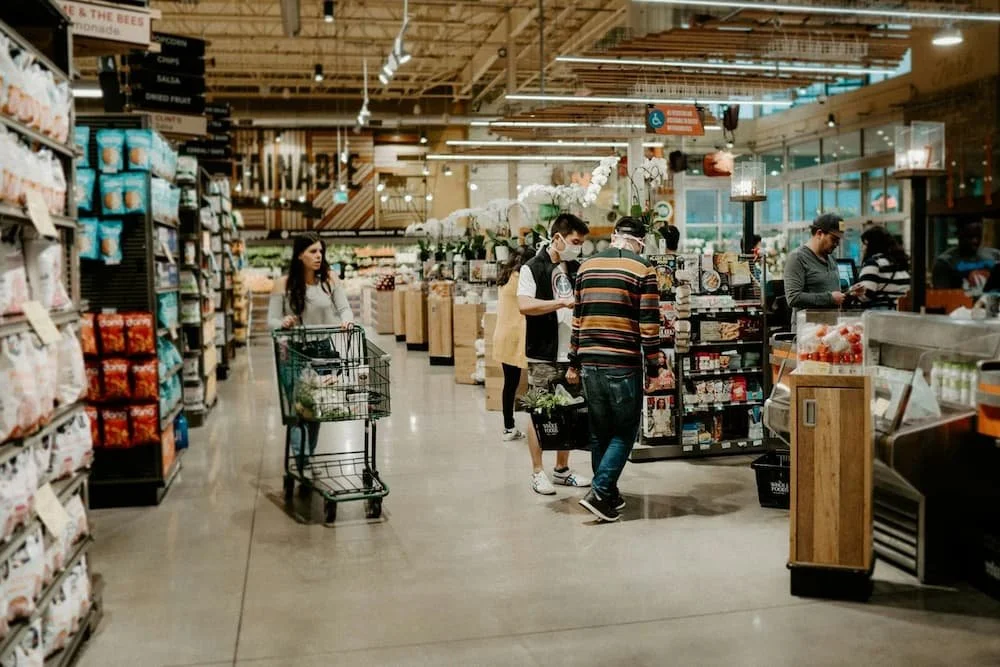
We see this constantly. A brand lands a major retail account and has no idea how they're going to fulfill the purchase order. Getting that call from Whole Foods or Costco feels like everything, and in the moment, saying no seems unthinkable.
But if you don't have the cash to produce the inventory, you're left with two bad options: you can't fulfill the order, which damages the relationship, or you fund it with expensive inventory financing options, which eats your margin. Sometimes the right answer is "not yet," and that takes real discipline. The brands that thrive in retail planned for it. They knew what capital they'd need, they built toward it, and they said yes when they were actually ready.
That Whole Foods call will come around again if you've built something worth carrying.
Setting your retail price point without a deep understanding of your fully landed costs
A lot of brands set their retail price based on what feels right for the market. That's a starting point, but it can't be your anchor. If it costs you $5.50 to get your product on the shelf and the consumer will only pay $5.00, you're upside down before you've sold a single unit.
And "fully landed costs" means more than your cost of goods. It includes broker markups, slotting fees, free fills, and the other costs of doing business with retailers that don't always show up on the invoice. Free fills in particular catch a lot of brands off guard. You're handing over inventory at no charge to get placement, and it's not accounted for in the COGS. The stack adds up fast.
Build your pricing from the bottom up. Start with what it actually costs to get your product to the shelf. Then layer in your margin. If the math doesn't work at a price the market will bear, that's a signal you need to solve before you walk into a retail meeting, not after.
Ready to own your operations?
Bravo CPG is the #1 fractional operations firm for growing CPG brands.
Understand buybacks before you sign
Retailers sometimes stock up during promotional periods when brands offer a discount. If that inventory doesn't sell before it approaches expiration, there are contracts where the brand is required to buy it back. We've heard some painful stories over the years. The brands that get hurt the most are the ones that didn't read that section of the contract closely or didn't model out what a buyback scenario would actually cost them. It will happen. Build it into your plan.
Continuing to be reactive instead of building infrastructure that allows you to be proactive
The obvious cost of reactive operations is the dollar amount. Expedited shipping, rush production, last-minute fixes. Those add up fast. But the real cost is harder to see: you get stuck in the present. You're managing what's right in front of you instead of working on your 12 to 18-month plan.
Strong CPG operations infrastructure doesn't just save money on overnight shipping. It creates the conditions where leadership can actually lead. When you're running in place, you're not building. At some point, every brand has to make the investment in systems and processes, or fighting the daily fires become the whole job.
Not having someone on your team who can actively manage your 3PL and/or co-man (not something a founder can do with their 100 other daily tasks)
If your 3PL doesn't answer emails, or your co-manufacturer takes weeks to respond, that's a real problem. And it's a bigger problem if no one on your team has the bandwidth or the expertise to push back.
Co-manufacturers in particular run old-school operations. Many of them have more business than they can handle and aren't bending over backwards for a small brand. You need someone on your side who knows what to ask for, knows what good looks like, and won't just accept "no" when the answer needs to be different.
There's a real example that illustrates this well: a founder I know in Bend built a canned beverage brand. Something went wrong on the co-manufacturer's production line and ruined the entire run. The contract said she'd be reimbursed, and eventually she was. But it took nine months to get the money back, and that was long enough to shut the business down. The contract protected her on paper. It didn't keep her in business.
Having someone who can manage these partner relationships daily, who knows when to push and how to be creative when the answer is no, isn't a nice-to-have at this stage of growth. It's operational infrastructure.
Cash trapped in under performing inventory
If 80% of your revenue is coming from 30% of your SKUs, you have cash sitting in products that aren't driving growth. That cash can't fund new production runs, new launches, or scale what's actually working. For food and beverage brands especially, there's an additional clock: once inventory gets close to expiration, your options narrow fast. You can't deliver to retail with less than 6-9 months of shelf life remaining (depending on the retailer), and eventually you're just writing off products you can't sell.
SKU rationalization isn't the most exciting thing you'll do this year, but it frees up capital and it simplifies your operations. Fewer SKUs means less complexity across design, ordering, and forecasting. It means your attention and your cash are focused where they actually move the needle.
The good news?
None of these are surprises once you see them. The brands that get hurt aren't making obvious mistakes. They're moving fast, saying yes to exciting opportunities, and hoping the operations side catches up. Sometimes it does. Often it doesn't.
The good news is that most of these issues are fixable with the right people, the right processes, and a willingness to slow down long enough to look at what's actually happening in the business.
At Bravo CPG, this is the work we do every day. We're an embedded CPG operations team for growth-stage food, beverage, beauty, and wellness brands. We combine hands-on execution with senior-level ownership, taking full responsibility for production, co-manufacturer and 3PL management, demand planning, wholesale orders, freight, and more. Our goal is simple: help brands scale profitably without operational chaos. If any of this sounds familiar, we'd love to talk.