Safety Stock: How Much Is Too Much?
Most growth-stage founders know they need safety stock. What they're less clear on is how much, and why the number they've landed on might be quietly costing them more than a stockout ever would.
The instinct is usually to stockpile. If you've ever been caught short on inventory heading into a big retail moment, you remember that feeling, and you swear you'll never be in that position again. So you build a buffer. Then you build a bigger one. And somewhere along the way, your warehouse fills up, your cash gets tied up in product that isn't moving, and you've traded one problem for a quieter but equally expensive one.
The real question isn't whether you should have safety stock. Of course you should. The question is whether your safety stock level is actually calculated, or just a number that makes you feel comfortable.
What Safety Stock Actually Is
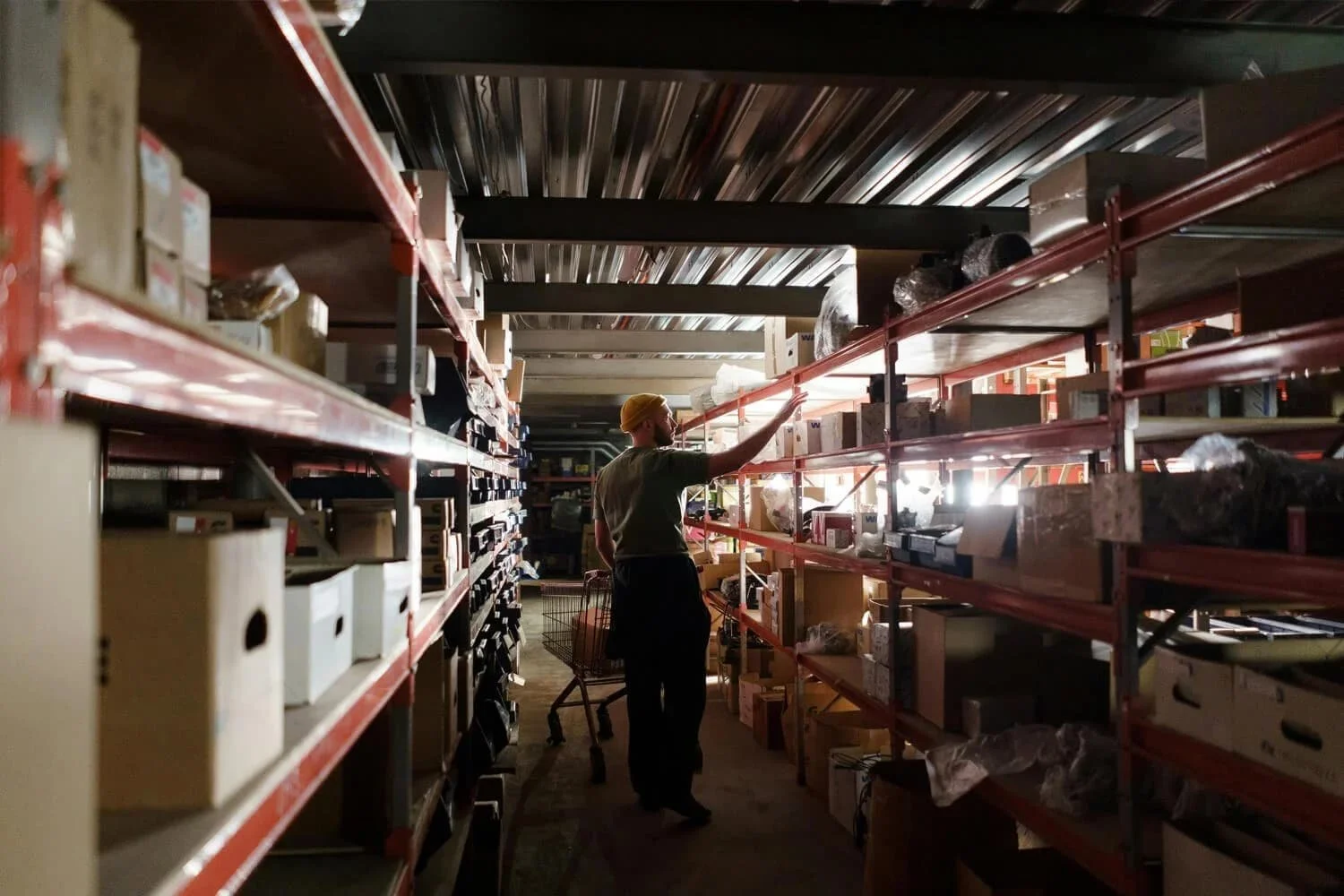
Safety stock is the inventory you can pull from at any given moment to service your customers outside of your normal steady-state demand. Think of it as a cushion. When something goes sideways on the demand side or the supply side, your safety stock is what keeps you shipping.
That definition sounds simple enough. Where things get complicated is figuring out how thick that cushion needs to be. Too thin and one delayed production run or one unexpectedly strong promotion blows right through it. Too thick and you're paying to store product you don't need yet, watching shelf life tick away, and strangling your own cash flow.
A Practical Starting Point: Anchor to Your Production Cadence
The cleanest way to think about safety stock calculation for most brands is to start with your production cycle. If you're running production every four weeks, your safety stock target should be enough inventory to bridge from when one run wraps to when the next one lands. In practice, a solid rule of thumb is to double your production cadence as a starting target.
So if you're producing every four weeks, aim for eight weeks of safety stock. At the lowest point in your inventory cycle, you should still have four weeks of stock on hand to carry you until the next production run arrives. That's your floor. That's what keeps orders going out the door even when things don't go perfectly.
From there, you refine. Eight weeks is a starting point, not a permanent answer.
What Should Actually Move That Number
Once you have a baseline, a few key factors should push your safety stock level up or allow you to bring it down.
Forecast variance is a big one. If your forecast-to-actuals gap runs within 5%, you have real predictability and you can operate tighter. If you're regularly off by a significant margin in either direction, you need more cushion because your planning signals can't be trusted yet.
Supplier reliability matters just as much. A co-manufacturer that consistently hits lead times lets you operate leaner. One that routinely runs late or has production variability means you need more buffer to absorb those delays without going out of stock.
Promotional activity is often underweighted. Promos can spike demand in ways that are genuinely hard to predict, and running light on safety stock going into a major promotion is one of the fastest ways to end up in a hole. Build up your buffer before a promo period, not after.
And if you're launching a new product or one with a complex production process, treat that separately. New items carry more uncertainty by definition. Give them more runway until you have enough data to calibrate.
Ready to stabilize ops and unlock growth?
Bravo CPG is the #1 fractional operations firm for growing CPG brands.
The Real Cost of Carrying Too Much
The obvious cost of excess safety stock is cash. You've converted working capital into product sitting in a warehouse, and that money isn't available for anything else. Add in the storage fees that compound every month, and the picture gets worse.
For food and beverage brands especially, there's also the shelf life problem. Inventory that sits too long becomes inventory you can't sell. You end up discounting it, destroying it, or donating it, and the margin hit is real.
But here's the piece that gets missed most often: if your safety stock keeps climbing, that's a signal something is fundamentally broken in your planning. Excess safety stock is a symptom. It means you don't trust your forecasts, you don't trust your supplier, or you're compensating for a process that hasn't been built properly. It's worth asking why the number keeps going up rather than just accepting it.
And the Real Cost of Running Out
Stockouts are painful in the immediate term. You're missing shipments, incurring penalties, and dealing with unhappy retail buyers. None of that is fun.
What's less obvious is the recovery time. When you strip your safety stock layer down to zero, you don't just flip a switch and get it back. You have to wait for the next production run, build back up, and operate against the wall the whole time. Every order that comes in during that period is a scramble. You're not replenishing from a cushion; you're chasing your own tail. Getting back to a stable operating posture takes longer than most brands expect, and the operational stress during that stretch compounds quickly.
DTC vs. Retail: Does the Channel Change the Calculation?
Somewhat, yes. The core safety stock calculation logic stays the same, but the flexibility you have to respond to low inventory is very different by channel.
With DTC and ecommerce, you have control. If you're running low on a SKU, you can pull it from the site, adjust availability, or manage the situation. You can let your inventory position influence what you actively sell.
In retail, that flexibility doesn't exist. Retailers set the rules, and they expect product on shelf. If you're in a national chain and you can't fill a replenishment order, you don't get to just quietly adjust. You get chargebacks, you risk losing shelf space, and your relationship with the buyer takes a hit that takes time to repair. Retail-heavy brands need to run their safety stock targets with more discipline precisely because the consequences of slipping up are harder to absorb.
The Goal Is a Number You've Earned
The best safety stock level isn't the highest one you can afford to carry. It's the lowest one you can confidently defend. That means understanding your production cycle, knowing your forecast variance, being honest about how reliable your suppliers are, and adjusting for what's coming on the demand side. When you've done that work, you're not just holding inventory. You're holding the right inventory, and you know exactly why it's there.
Safety stock done well is quiet. You don't notice it because everything keeps working. Safety stock done poorly is loud. You notice it either because you've run out or because your accountant keeps asking why the warehouse bill won't stop growing.
About Bravo CPG
Bravo CPG is an embedded operations team for growth-stage food, beverage, beauty, and wellness brands. We work inside your business, not above it, taking full ownership of production, co-man and 3PL management, demand planning, wholesale orders, freight, and more. Getting safety stock right is one of the first things we tackle with new clients, because it touches cash, service levels, and operational confidence all at once. If your inventory strategy feels more like guesswork than a process, we'd be glad to talk.