Amazon FBA Requirements Every CPG Brand Needs to Know
Amazon FBA is a straightforward concept: you ship your inventory to Amazon's fulfillment centers, and Amazon handles storage, picking, packing, shipping, and returns. For CPG brands trying to scale on Amazon without building their own logistics infrastructure, it's a genuinely useful program. But FBA comes with a long list of requirements, and Amazon enforces them strictly. Non-compliant shipments get rejected, inventory gets stranded, and unplanned fees add up fast.
If you're growing a food, beverage, beauty, or wellness brand and you want to use FBA, you need to get these requirements right before your first pallet leaves the dock. This post breaks down what you actually need to know.
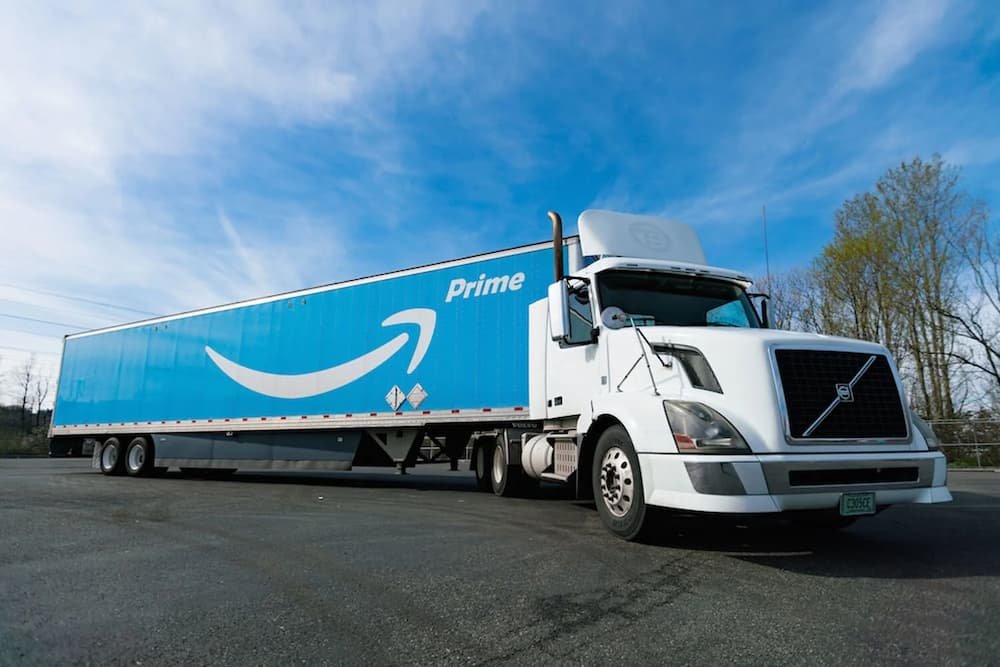
Amazon FBA Seller Requirements
Before you can ship anything to Amazon, your seller account needs to be in order. You'll need an active Amazon Seller Central account, and for most FBA sellers, a Professional plan is required. The Individual plan charges $0.99 per item sold with no monthly fee, but it doesn't include access to bulk listing tools, advertising, and certain restricted categories that most CPG brands need. If you're serious about FBA, go Professional.
Enrollment in FBA is done through Seller Central by clicking the Settings gear icon > Account Info > Manage > Register for FBA. Beyond that, you'll need a valid business address, bank account, and tax information on file. Amazon won't process payments or complete enrollment without them.
This part is pretty standard, but don't overlook it. Brands sometimes rush into creating ASINs and building shipment plans before their account setup is complete, and then they hit delays. Get your account squared away first.
Product Eligibility Requirements
Most products eligible to sell on Amazon are also eligible for FBA, but certain categories require additional approval before you can ship. Food and beverage, supplements, personal care, and hazmat products all have category-specific rules. If you're in any of those spaces, check Amazon's restricted products policy before assuming you're good to go.
Each product and each variation needs its own unique ASIN. A 12-count and a 6-count of the same product are two separate ASINs. A chocolate flavor and a vanilla flavor of the same protein bar are two separate ASINs. That's not just a technicality; Amazon's inventory system is built around it.
For CPG brands specifically, expiration dates are a real operational concern. Products with expiration dates must have at least 90 days of shelf life remaining when received at the fulfillment center. If your product arrives with less than 90 days left, Amazon will reject it or dispose of it. Build your production and shipping timelines with this buffer in mind.
Amazon FBA Label Requirements
Every unit shipped to FBA needs a scannable barcode on the exterior. You can use either a manufacturer barcode (UPC or EAN) or an Amazon barcode, known as an FNSKU. Amazon strongly prefers FNSKU because it ties the product directly to your seller account and prevents inventory commingling with other sellers who carry the same product.
A few label placement rules that trip people up:
Labels go on a flat surface, not on seams, edges, corners, or any surface that opens (lids, box tops, zip closures).
Labels must be on the outermost layer of packaging, which matters if your product is poly-bagged.
If the product already has a manufacturer barcode, cover it so only one barcode is visible and scannable.
Each FNSKU must correspond to a specific product variation. Don't reuse FNSKUs across SKUs.
One important update: as of January 1, 2026, Amazon no longer offers FBA prep and item labeling services in the US. That means you're responsible for labeling either in-house or through a third-party prep provider. If you don't have a reliable prep partner handling this, it's worth sorting out before your next shipment.
Amazon FBA Prep Requirements
Boxes can't exceed 25 inches on any side and can't weigh more than 50 lbs, unless a single item inside exceeds that weight on its own. Boxes between 50 and 100 lbs need a "Team Lift" label. Anything over 100 lbs requires a "Mechanical Lift" label and must be palletized.
On material: use corrugated cardboard with a minimum burst strength of 200 lbs per square inch or a 32 ECT rating. Amazon expects boxes to survive a 3-foot drop test. If your packaging can't handle that, you'll have damage issues at the fulfillment center. All seams need to be sealed with strong tape, no loose flaps.
Some category-specific prep requirements worth knowing:
Poly bags must be transparent, at least 1.5 mil thick, and include a suffocation warning if the opening is 5 inches or larger.
Liquids over 4.2 oz without a secondary seal need cap sealing, whether that's around twist tops, over flip tops, or vertically over pumps.
Sets sold as a single unit must be packaged together and labeled "Sold as set" to prevent separation. Individual barcodes on items within the set must be covered.
These details matter. A rejected shipment doesn't just cost you time; it can also mean missed sales velocity during a launch or a promotional window you can't recover.
Offload your 3PL or FBA management to us!
Bravo CPG is the #1 fractional operations firm for growing CPG brands.
Amazon FBA Pallet Requirements and Inbound Shipments
Every inbound shipment must be created through the "Send to Amazon" workflow in Seller Central before goods leave your warehouse. This generates the FBA Box ID labels you'll need for each carton (placed on the top center of the box) and the FBA Pallet ID labels for freight shipments (four labels per pallet, one centered on each side).
You have two shipping options: Small Parcel Delivery (SPD) for individual boxes, or Less Than Truckload (LTL) and Full Truckload (FTL) for pallet shipments. Amazon's partnered carriers, including UPS, are available through Seller Central and typically offer better rates than going direct. If you're doing regular volume through FBA, it's usually worth using them.
One thing that creates unnecessary problems: reusing boxes with old shipping labels, barcodes, or markings. Remove or cover everything from previous shipments. Amazon's receiving process depends on clean, correct labeling, and anything that creates ambiguity can slow down your check-in or trigger a rejection.
Inventory Management Requirements
Once your inventory is inside Amazon's fulfillment centers, you're still responsible for managing it. Amazon uses a Capacity Limits system to control how much inventory each seller can send in a given period. If you're planning a large restock or building inventory ahead of a promotion, check your capacity limits before creating the shipment.
For products with expiration dates, keep a close eye on your FBA inventory age. Amazon can dispose of expired or near-expiration inventory, and they'll charge you for it. Having a solid demand planning process isn't optional if you're a food, beverage, or supplement brand on FBA.
And if your products arrive at the fulfillment center without proper prep or labeling, Amazon will charge unplanned service fees to fix the issue. These fees vary by product type and quantity, but they add up quickly and are entirely avoidable with the right prep process in place.
How Bravo CPG Helps Brands Meet Amazon FBA Requirements
Getting FBA right at scale is an operational discipline, not a one-time setup task. Bravo CPG is an embedded operations team for growth-stage food, beverage, beauty, and wellness brands. We manage Amazon FBA shipments end-to-end: creating inbound shipments in Seller Central, coordinating with 3PL partners to make sure inventory arrives properly labeled and prepped, and serving as the primary point of contact for day-to-day fulfillment operations. We've managed FBA operations across 225+ CPG brands, so we've seen what works and what doesn't. If you want a team that takes full ownership of this so you don't have to, learn more about our 3PL and FBA management services.
Amazon FBA compliance isn't complicated once you know the rules, but it does require consistent execution. If your brand is growing and you want to make sure your FBA operations are set up correctly, book a discovery call with Bravo CPG and let's talk through where you are and what it would take to get there.
Frequently Asked Questions
What are the basic Amazon FBA requirements?
To use Amazon FBA, you need an active Professional Seller Central account enrolled in FBA, products that comply with Amazon's eligibility and restricted products policies, proper labeling (UPC, EAN, or FNSKU) on every unit, and packaging that meets Amazon's size, weight, and material standards. All shipments must be created through the "Send to Amazon" workflow before goods leave your facility.
What are Amazon FBA label requirements?
Every unit must have a scannable barcode (manufacturer barcode or FNSKU) on the exterior, placed on a flat surface away from seams, edges, corners, or openings. Labels must be on the outermost layer of packaging. If the product has an existing manufacturer barcode, it must be covered so only one barcode is visible. As of January 2026, Amazon no longer handles labeling in the US, so brands are responsible for this step.
What are Amazon FBA pallet requirements?
Pallet shipments (LTL or FTL) require four FBA Pallet ID labels, one centered on each side of the pallet. Shipments must be created through the "Send to Amazon" workflow first, which generates the correct pallet labels. Boxes on the pallet must meet standard size and weight limits (no more than 25 inches on any side, no more than 50 lbs) unless a single item exceeds those limits.
What are Amazon FBA prep requirements for liquids?
Liquids over 4.2 oz that don't have a secondary seal require cap sealing. That means sealing around twist tops, over flip tops, or vertically over pumps. This applies to beverages, sauces, personal care products, and other liquid items. Amazon's receiving teams check for this, and non-compliant products can be rejected or charged unplanned service fees.
What are Amazon FBA seller requirements to get started?
You need a Professional Seller Central account, FBA enrollment through your account settings, and valid business, banking, and tax information on file. From there, you'll create product listings with unique ASINs for each SKU and variation, ensure your products meet eligibility requirements for your category, and set up your first inbound shipment through the "Send to Amazon" workflow.